Defining the AI narrative market
The term "AI-generated narrative coins" describes a specific intersection of blockchain technology and artificial intelligence, but it often masks two very different types of projects. To navigate this space, you must distinguish between tokens that use AI for genuine utility and those that rely on AI-generated hype cycles to drive price action.
A crypto narrative is essentially a simplified investment theme that helps market participants digest complex technological shifts. As noted by CoinGecko, these narratives allow traders to focus on a coherent story rather than getting lost in technical weeds. In the current market, the "AI" label has become one of the most powerful narrative drivers for 2026.
However, not all AI coins are created equal. On one side, you have projects integrating AI for real utility—such as decentralized compute networks, AI-driven data analytics, or autonomous agent protocols. On the other side, you have tokens where AI is used primarily to generate social media content, press releases, and community engagement to create artificial momentum.
Platforms like Santiment use AI to analyze social trends and detect these narratives in real-time, helping traders identify which stories are gaining traction. This creates a feedback loop: as more people discuss a narrative, the AI detects it, which attracts more attention, which further fuels the narrative. Understanding this dynamic is crucial for avoiding projects that are nothing more than sophisticated marketing campaigns.
The hidden infrastructure behind AI tokens
The narrative around AI-generated coins often focuses on the software models, but the physical and digital infrastructure supporting them is equally critical. These tokens rely on a convergence of blockchain protocols and decentralized compute networks to function. Without robust underlying layers, the promise of autonomous economic agents remains just that—a promise.
At the core of this infrastructure is the data layer. AI models require massive, verifiable datasets to train and operate. Projects in this space are increasingly integrating blockchain to create transparent, immutable records of data provenance. This ensures that the information feeding these models is authentic and has not been tampered with, a crucial step for maintaining trust in automated decision-making systems.
Beyond data, decentralized compute is the engine driving AI token efficiency. Traditional cloud computing is centralized and often expensive. Decentralized networks distribute computational tasks across a global network of nodes, allowing for scalable, cost-effective processing power. This infrastructure enables AI agents to execute complex tasks without relying on a single provider, reducing single points of failure and censorship risks.
However, this infrastructure is not without its challenges. The integration of blockchain and AI introduces new vectors for attack and inefficiency. Smart contract vulnerabilities can compromise the integrity of the entire system, while computational bottlenecks can delay critical operations. Investors must scrutinize the technical architecture of these projects, looking for evidence of rigorous security audits and scalable design.
The market correlation between AI infrastructure tokens and broader tech trends is significant. As demand for AI compute grows, so does the value of the networks that facilitate it. Understanding this infrastructure is key to evaluating the long-term viability of AI-generated narrative coins.
Tracking AI Narrative Sentiment
Identifying the next wave of AI-driven crypto narratives requires more than just reading headlines. It demands a view into the actual conversation volume and sentiment shifts across social channels. Tools that aggregate this data allow traders to spot emerging trends before they are priced into the market.
Santiment’s Social Trends dashboard is a primary example of this infrastructure. It uses AI to analyze daily message volumes and explain what the crypto community is discussing, helping users separate signal from noise. By focusing on total volume and sentiment, you can see which AI narratives are gaining traction in real time.
To evaluate these tools effectively, it helps to compare their core capabilities. The table below outlines the key features of popular narrative tracking platforms, focusing on data sources, real-time updates, and cost structures.
| Tool | Primary Data Source | Real-Time Alerts | Pricing Model |
|---|---|---|---|
| Santiment | Social Media & On-Chain | Yes | Freemium |
| LunarCrush | Social Media Mentions | Yes | Subscription |
| The TIE | On-Chain & Social | Limited | Freemium |
| CoinMarketCap | Market Data & News | No | Free |
Choosing the right tool depends on your need for immediacy. Real-time alerts are critical for high-stakes narrative trading, where sentiment can shift in minutes. Freemium options like Santiment offer a starting point, but serious traders often require the depth of paid subscriptions to access historical sentiment data and advanced filtering.
Strategic Risks in AI Coin Investments
The current AI token market is less a technological revolution and more a speculative mirror. While the narrative of decentralized AI is compelling, the infrastructure often fails to deliver. As Coinbase Institutional Market Intelligence notes, many of these projects lack persistent demand drivers in the short to medium term, relying instead on the broader hype cycles of both crypto and artificial intelligence [src-serp-8].
Regulatory Uncertainty
Regulators are still defining what constitutes a security in the context of algorithmically generated assets. This ambiguity creates a fragile legal environment for investors. Unlike established cryptocurrencies with clear precedents, AI coins often operate in a gray area where token utility, governance rights, and profit-sharing mechanisms are not yet legally codified. A sudden regulatory shift can invalidate the underlying economic model of a project overnight.
Technological Immaturity
Many AI tokens promise autonomous agents or decentralized compute networks, but the reality is often far less sophisticated. A recent arXiv review highlights that numerous projects suffer from architectural illusions, where the "AI" component is merely a wrapper around existing services rather than a genuine decentralized innovation [src-serp-2]. This gap between marketing and technical capability poses a significant risk for long-term holders.
Market Volatility
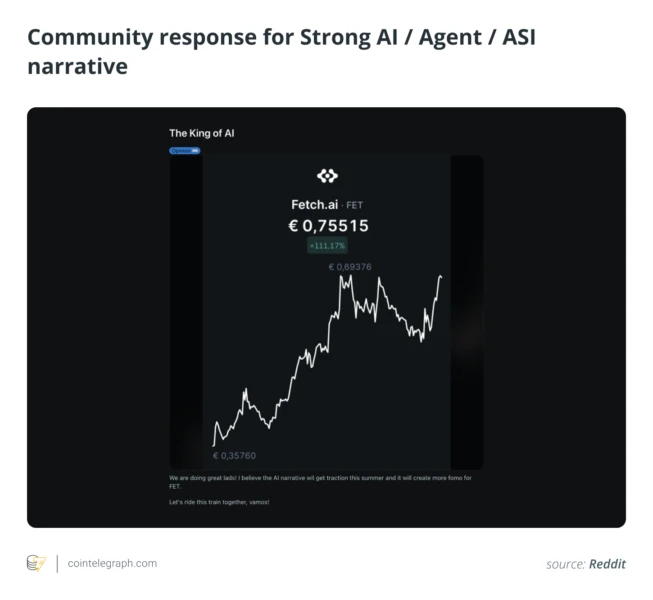
The price action for AI narrative coins is driven primarily by sentiment rather than fundamentals. This makes them exceptionally volatile and prone to rapid corrections. To contextualize this risk, consider the price behavior of a major AI token:
The chart above illustrates the sharp spikes and subsequent declines characteristic of narrative-driven assets. Without tangible revenue or adoption metrics, these prices are disconnected from intrinsic value, leaving investors exposed to sudden liquidity crunches.
Essential tools for AI development
Building or analyzing AI-generated narrative coins requires a stack that balances raw computational power with precise market data. The infrastructure for these projects is less about magic and more about managing latency, token costs, and data integrity. Developers need reliable access to large language models (LLMs) and real-time on-chain data, while investors need tools to separate signal from the noise of generative hype.
Hardware and Software Foundations
The first layer of your stack is the compute environment. Running local inference models for sentiment analysis or narrative generation demands significant GPU resources. For developers, this often means investing in high-end consumer GPUs or cloud instances from providers like AWS or Google Cloud. For those testing ideas without heavy capital expenditure, cloud-based API access to models like Llama 3 or Mistral offers a scalable starting point.
On the software side, frameworks like LangChain and LlamaIndex are standard for connecting AI models to blockchain data. These tools allow you to build agents that can monitor smart contracts, track wallet movements, and summarize on-chain activity in natural language. Without these connectors, your AI remains isolated from the very data it needs to analyze.
Market Analysis and Data Tools
For investors and analysts, the challenge is filtering the thousands of new tokens launched daily. Tools like CoinStats or Nansen provide the necessary dashboards to track whale movements and smart money flows. These platforms aggregate data that is otherwise fragmented across different block explorers, giving you a unified view of where capital is actually moving in the AI narrative space.
Recommended Resources
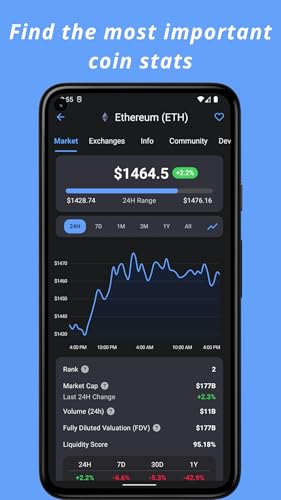
The following resources and tools can help you get started with AI crypto development and analysis. These selections focus on practical utility for building and monitoring AI-driven projects.


As an Amazon Associate, we may earn from qualifying purchases.
Frequently asked: what to check next
Note: This section addresses common inquiries based on current market infrastructure. For real-time performance data, refer to the TechnicalChart above.
No comments yet. Be the first to share your thoughts!