What AI narrative coins actually are
The term "AI-generated narrative coins" describes a specific segment of the crypto market where tokens are valued based on their alignment with the broader artificial intelligence adoption wave. This is not a reference to coins created by AI, but rather assets that capitalize on the infrastructure, data, and compute demands of AI development.
These projects fall into two distinct categories. The first includes infrastructure plays—tokens that provide decentralized GPU rendering, data storage, or privacy-preserving computation. The second category comprises speculative narrative tokens, which may have minimal utility but trade heavily on market sentiment surrounding AI trends.
Distinguishing between these two is critical for risk management. Infrastructure tokens often have tangible revenue models or partnerships with tech firms, while narrative tokens are driven almost entirely by market momentum and developer activity. Understanding this split helps investors avoid confusing hype with actual technological integration.
The current market landscape in 2026 is defined by this divergence. While some projects build functional decentralized networks for machine learning workloads, others rely on vague roadmaps and marketing. Investors must look past the "AI" label in a token's name to assess whether it provides real utility or merely rides a speculative wave.
Core infrastructure layers to watch
The AI crypto ecosystem is moving past simple narrative hype into structural dependency. Projects that survive the current cycle are those providing the actual compute, data, and privacy utilities that AI agents require. This section breaks down the foundational layers supporting AI-generated narrative coins, focusing on the infrastructure that turns speculative interest into functional utility.
Decentralized Compute and GPU Networks
AI models, particularly large language models and generative agents, are computationally expensive. Centralized cloud providers like AWS or Azure dominate this space, but they create bottlenecks and single points of failure. Decentralized GPU networks solve this by aggregating idle graphics processing units from individuals and data centers worldwide, offering a cheaper, distributed alternative for training and inference.
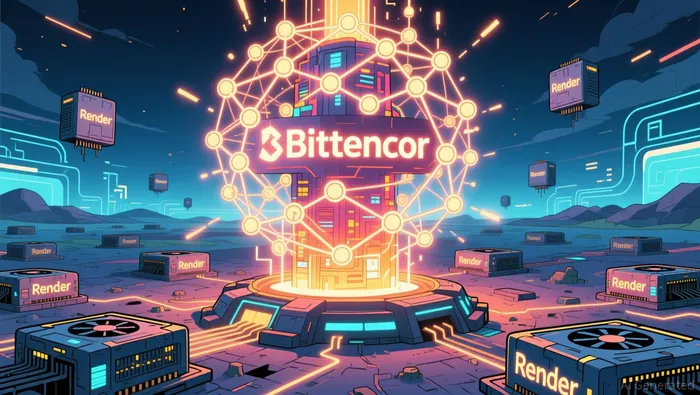
Render (RENDER) leads this category by providing a decentralized GPU network for rendering and AI workloads. It allows artists and developers to rent GPU power, creating a liquid market for computational resources. Similarly, Atheneum (ATH) and other emerging protocols are building specialized clouds for AI inference, ensuring that the demand for processing power doesn't bottleneck the growth of autonomous agents.
Data Provenance and AI Training Sets
AI agents need high-quality, verified data to function correctly. Without reliable data inputs, these agents hallucinate or make poor decisions. Infrastructure layers that provide verifiable data provenance—proving where data came from and that it hasn't been tampered with—are critical for trust in AI-driven financial systems.
Projects like Bittensor (TAO) create decentralized marketplaces for AI intelligence, where miners contribute data and models to earn rewards. This creates a self-sustaining economy for AI training data. Other protocols focus on verifiable compute, ensuring that the data processing happening on-chain matches the actual computational work performed, a necessity for auditing AI-driven transactions.
Privacy-Preserving Computation
For AI agents to operate in financial or personal domains, they must handle sensitive data without exposing it. Zero-knowledge proofs (ZKPs) and Fully Homomorphic Encryption (FHE) allow computations to be performed on encrypted data. This means an AI agent can analyze a user's financial history or health data without ever seeing the raw, unencrypted information.
FHE (FHE) is a leading protocol in this space, enabling privacy-preserving AI computation. This layer is essential for regulatory compliance and user trust. As AI agents begin to manage personal assets or execute complex trades, the ability to verify outcomes without revealing underlying data will separate robust infrastructure from speculative projects.
Infrastructure Comparison
The following table compares key infrastructure projects by their primary use case, token utility, and market cap tier. This helps distinguish between pure compute providers, data marketplaces, and privacy layers.
| Project | Infrastructure Layer | Token Utility | Market Cap Tier |
|---|---|---|---|
| Render (RENDER) | Decentralized GPU Compute | Pay for GPU rental and rendering services | Large Cap |
| Bittensor (TAO) | Decentralized AI Marketplace | Reward miners for data/model contributions | Mid Cap |
| FHE (FHE) | Privacy-Preserving Computation | Gas and staking for encrypted computation | Small Cap |
| Neural Protocol (NTRN) | AI Agent Infrastructure | Staking and governance for agent networks | Mid Cap |

Top AI tokens by market cap
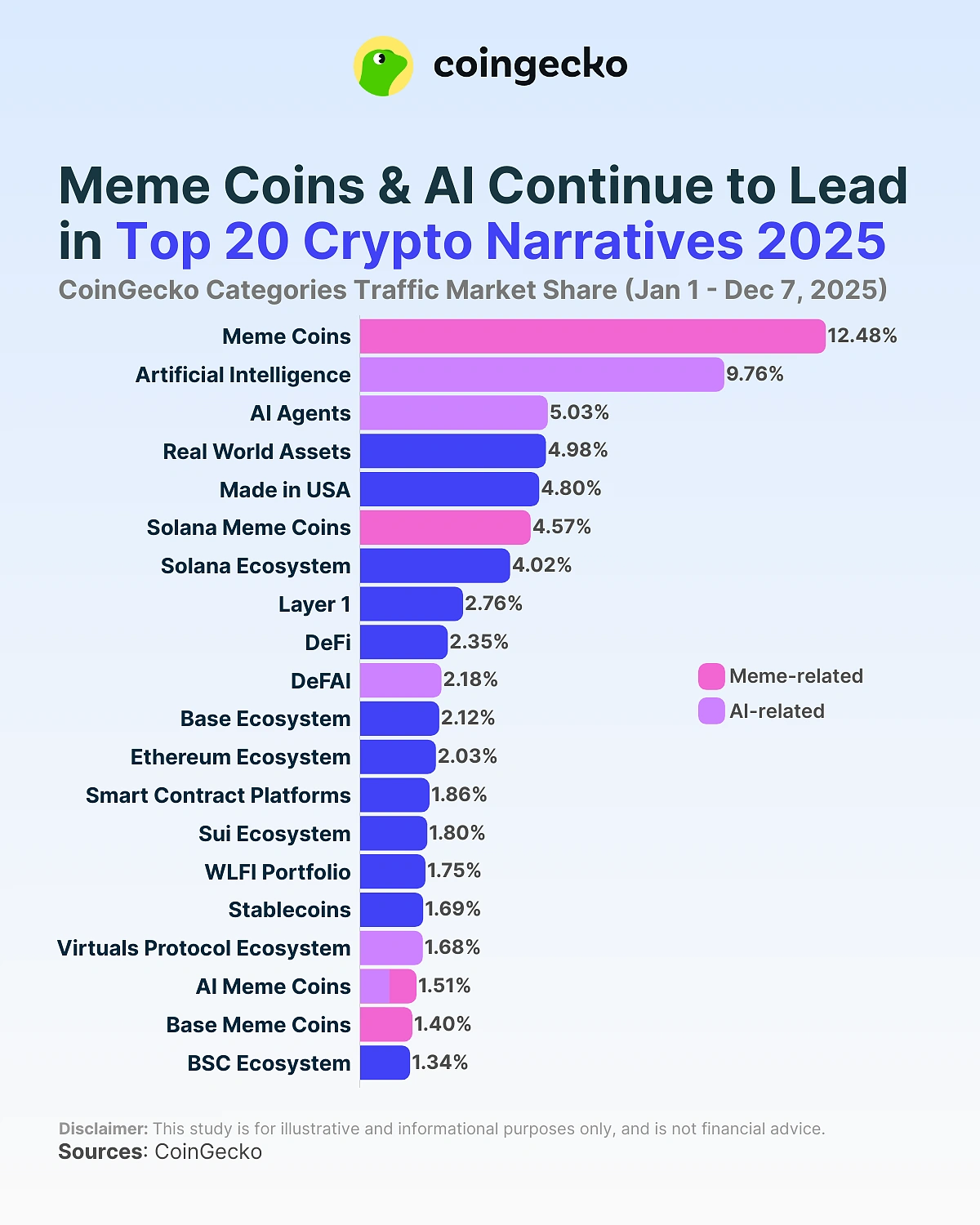
The AI crypto sector has consolidated around a few major infrastructure plays. Rather than chasing speculative memecoins, capital is flowing toward projects with measurable network usage and real-world compute demand. The following tokens represent the current market leaders, distinguished by their specific utility in the decentralized AI stack.
Bittensor (TAO)
Bittensor operates as a decentralized marketplace for machine learning models. Instead of relying on a single centralized entity to train AI, the network allows miners to submit models and validators to evaluate them. The token, TAO, incentivizes this competition. High-performing models earn more TAO, creating a feedback loop that drives technical improvement. This structure positions Bittensor as the primary infrastructure for decentralized AI training, distinct from simple inference services.
Render (RENDER)
Render Network provides distributed GPU rendering power, originally focused on graphics but now critical for AI inference and training. As demand for compute exceeds centralized cloud capacity, Render’s decentralized node network offers an alternative. The RENDER token facilitates payment for these services. Its value proposition is tied directly to the utilization of GPU resources, making it a proxy for the broader AI compute shortage. This infrastructure layer is essential for scaling AI workloads without relying on single providers.
Near Protocol (NEAR)
While not an AI-native chain, NEAR has become a hub for AI applications due to its high throughput and low fees. Projects like Akash and various AI agents are building on NEAR for scalability. The NEAR token serves as the gas and staking asset for this ecosystem. Its role in the AI narrative is that of a foundational layer, enabling the rapid deployment and interaction of AI agents. Investors often view NEAR as a safer, broader play on AI adoption rather than a pure AI infrastructure bet.
Fetch.ai (FET) / Artificial Superintelligence Alliance (ASI)
The merger of Fetch.ai, SingularityNET, and Ocean Protocol into the Artificial Superintelligence Alliance (ASI) represents a consolidation of AI agent, AI marketplace, and data economy assets. The new ASI token aims to create a unified ecosystem for autonomous AI agents. This move addresses fragmentation in the sector by pooling resources and user bases. The alliance focuses on practical applications like supply chain automation and personalized AI services, targeting real-world utility over abstract speculation.
Strategic Tools for Onchain Analysis
Evaluating AI-generated narrative coins requires separating technical momentum from fundamental utility. These assets are highly volatile, often driven by speculative sentiment rather than immediate revenue. To assess these assets effectively, you need a dual approach: monitoring on-chain activity for early signals and using technical charts to confirm trends.
On-Chain Activity and Tokenomics
Before looking at price action, verify the project's infrastructure. AI coins often rely on decentralized compute networks or specific tokenomics models. Check if the token is used for paying GPU rentals, staking, or governance. Look for consistent transaction volume from unique addresses, which indicates real usage rather than bot activity. Projects like Render (RENDER) or Bittensor (TAO) have clear utility cases that can be tracked on-chain.
Technical Analysis for Volatility
Technical analysis helps you time entries and exits in a market that moves faster than traditional assets. Use provider-backed charts to identify support and resistance levels. For example, observing the TAO/USDT pair on a technical chart can reveal whether a breakout is genuine or a liquidity trap. Focus on volume spikes alongside price moves; a price increase without volume is often a false signal.
Fundamental Evaluation
Fundamental analysis for AI coins is less about P/E ratios and more about ecosystem growth. Is the network expanding? Are developers building on the subnet? Check official repositories and community governance proposals. Avoid projects with anonymous teams or unclear roadmaps. Stick to platforms with transparent data and active developer communities.


As an Amazon Associate, we may earn from qualifying purchases.
Building your own AI crypto project
Start AI-Generated Narrative Coins with the constraint that matters most in real life: space, timing, budget, skill level, maintenance, or availability. That first constraint should shape the rest of the plan instead of appearing as an afterthought. Keep the first pass simple enough to verify. Compare the main options against the same criteria, remove choices that only work in ideal conditions, and save optional upgrades for later.
No comments yet. Be the first to share your thoughts!